Skip to content
agenticoperatingsystemguide.comUpdated A governed agentic OS

The open-source agentic operating system

The open-source AI Operating System

An agentic operating system decides what each AI agent may reach, on which sandbox, and who signs off before the work lands. Kortix is the open-source AI Operating System: your agents, their skills, your company memory, and every connector in one git repo you own, and it is built to survive a security review.

Self-host is free · Per-resource permissions for people and agents · Open source. Read it, fork it, audit it.

Tools · Northwind Billing

List invoices
Allow
Get an invoice
Default
Send a payment reminder
Default
Delete an invoice
Block
Record a payment
Ask
Refund a payment
Ask

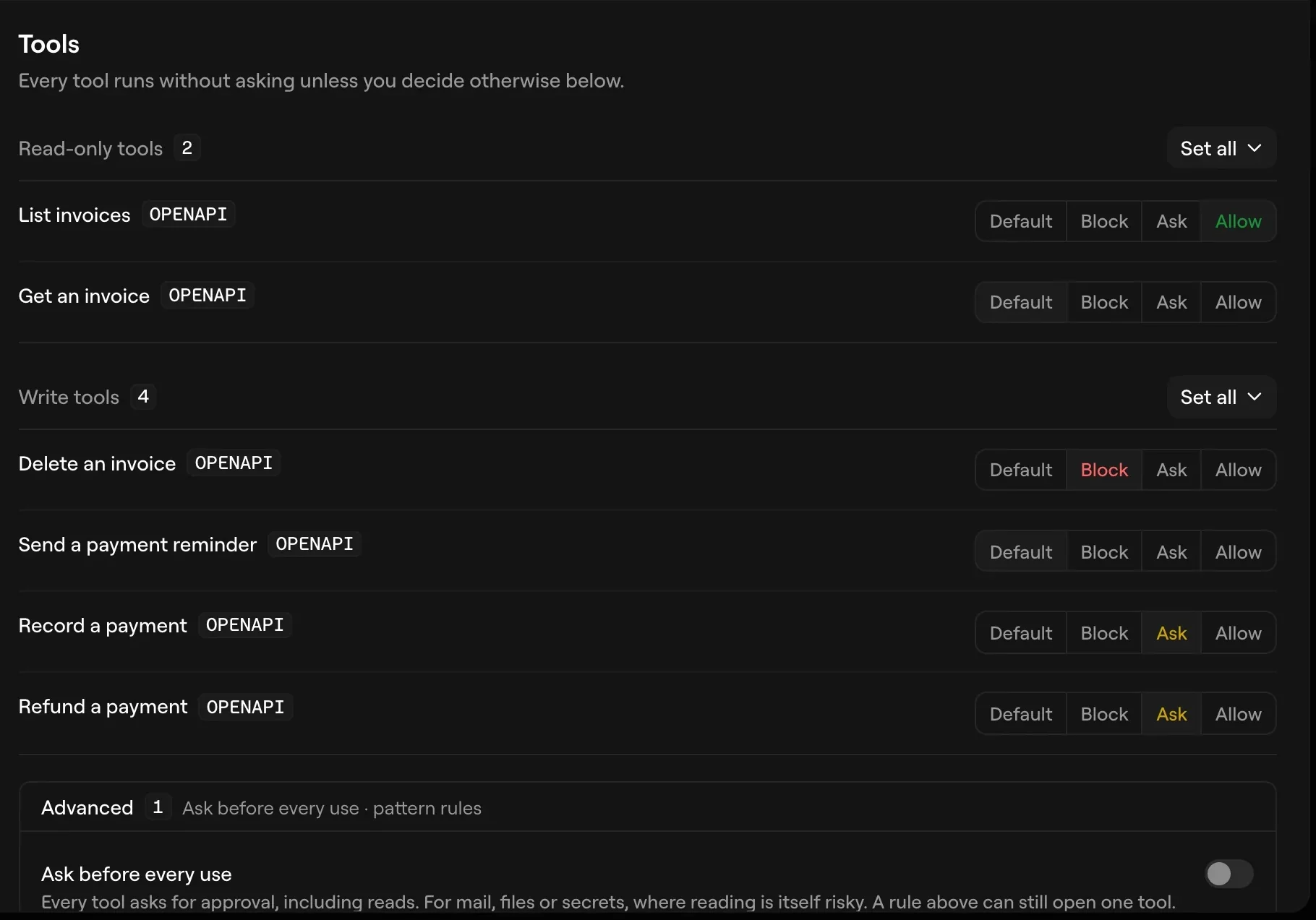
The Tools tab on the Northwind Billing connector sets a policy for each action: List invoices is Allow, Get an invoice and Send a payment reminder stay on Default so the connector's policy decides them, Delete an invoice is Block, and Record a payment and Refund a payment are Ask so each call waits for a person

https://kortix.com/docs/connect/connectors

Session work reaches main through a change request. Merge is default-deny for agents.

The work a company hands over, and what it gets back

Each file is what someone opens afterwards.

Operations

The Monday readout, built before Monday

A cron trigger starts a session on Sunday night. The agent pulls the week's numbers from the connectors it was granted and returns a spreadsheet with the variance called out.

Work product

ops/weekly-readout.csv
MetricThis weekLast week
Signups412388
Activation61%58%
Churn1.9%2.2%
Three metrics past the 5% flag

Engineering

An issue becomes a change request

The agent reproduces the failing export on its session branch, patches the timeout, runs the checks and opens the change request with the diff attached, and a person merges it.

Work product

fix-export-timeout.diff
app/exports/worker.ts-  await render(job, { timeout: 30_000 })+  await render(job, { timeout: 120_000 })
Change request 4182, checks green

Support

The queue is triaged before the shift

The agent reads the overnight tickets, groups them by cause, drafts the replies it can support and holds the rest for a person.

Work product

support/triage.md
  • Refund requests6
  • Carrier delay4
  • Needs a person2
12 tickets read, 2 held

An operating system you cannot read is a permission model you have to trust.

A company that owns the repo can read every grant, fork the whole project, and audit what its agents did without asking a vendor for a report. The permission model gets a diff, and a diff can be reviewed.

Read it, fork it, audit it. 20,000+ GitHub stars Read the source · How the grants work · Self-hosting

Where the permission layer lives in each tool

Where the compute runs, where configuration lives, and who can widen an agent's reach.

Who runs the compute
KortixKortix Cloud, your VPC, or your on-prem network
Claude CoworkAnthropic's cloud, or your own Bedrock, Google Cloud or Foundry account
Where the project's configuration lives
Kortixkortix.yaml and agents/*.md in your repo
Claude CoworkIn the Claude app: projects, connectors, folder instructions
Self-host
KortixYes, on your own network, free
Claude CoworkNo. Model access runs in your Bedrock, Google Cloud or Foundry account
Per-resource permissions and approvals
KortixPer-resource permissions for people and agents; an audit trail
Claude CoworkConnector tool permissions, an approval mode, admin controls
Open source
KortixYes. Read it, fork it, audit it.
Claude CoworkNo

Questions the term raises

Direct answers to the three questions buyers ask first.

What is an agentic operating system?

An agentic operating system is the layer that gives each AI agent an identity, a grant, a sandbox to work in and a record of what it did. Without that layer, a company has a chat window and no answer to who allowed the work.

Are there any agentic OS?

Yes. Kortix is one: open source, self-hostable, with each agent's grant in a file a reviewer can read. OpenFang is another, a single Rust binary that runs scheduled agents and puts approval gates on sensitive actions.

How to build an agentic operating system?

Start where the grants live. Name each agent, list the connectors and secrets it may reach, and decide who approves a change. Then add the scheduler, the sandbox and the record, and keep the whole set in one repo.

Put the grants in a repo you own

Start on Kortix Cloud, or run the whole stack on your own network.